- Water Filters Offered
- sku: 5165534344666693
- IPPINKA IPP-B2106
IPP-B2106 IPPINKA Binchotan Kishu Water Purifying Sticks
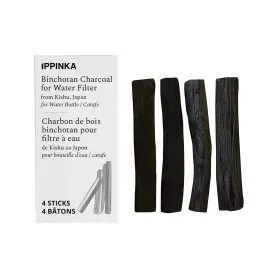
| Brand | IPPINKA |
|---|---|
| Part Type | WATER STICK |
| Size | 4 COUNT |
| Capacity | 1.0 |
| Model Number | IPP-B2106 |
| Material | CHARCOAL |
| Unit Count | 4.0 |
| UPC | 027132134939 |
| Package Dimensions Lxwxh | 4.76X2.32X1.93 INCHES |
| Weight | 0.29 POUNDS |
Review IPPINKA Binchotan Charcoal From Kishu Japan Water Purifying Sticks For Great-tasti
Introducing the Ippinka Binchotan Kishu Water Purifying Sticks, a natural and effective solution for enhancing the taste and quality of your drinking water. These premium quality sticks are made from 100% authentic Binchotan charcoal, sourced from the Kishu region in Japan, renowned for its superior quality.
Binchotan charcoal is a unique type of activated charcoal that undergoes a meticulous production process called "Binchotan-tan," which involves slow burning in a low-oxygen environment. This process creates a porous structure that is rich in mineral ions and negative ions, making it highly effective in adsorbing impurities and contaminants from water.
Each pack contains six sticks, which can be used for up to 4 weeks, depending on the water hardness and usage. To use, simply place one stick in a container or pitcher, and let it sit for a few hours before using the water. The water will gradually absorb the mineral ions and negative ions from the charcoal, resulting in improved taste and quality.
The Ippinka Binchotan Kishu Water Purifying Sticks do not add any taste or odor to the water, but rather enhance the natural taste by removing impurities and contaminants. These sticks are perfect for people who prefer the taste of natural mineral water, without the added costs or environmental impact of buying bottled water.
The sticks are also safe to use and eco-friendly. They do not contain any chemicals or additives, and can be easily disposed of by burying them in the soil once they have reached the end of their life.
In summary, the Ippinka Binchotan Kishu Water Purifying Sticks are a natural, effective, and eco-friendly solution for enhancing the taste and quality of your drinking water. Made from authentic Binchotan charcoal sourced from the Kishu region in Japan, these sticks are rich in mineral ions and negative ions, making them highly effective in adsorbing impurities and contaminants from water. Each pack contains six sticks, which can be used for up to 4 weeks, and are safe to use and easy to dispose of. Try them today and enjoy the benefits of pure, great-tasting water.
I. Introduction
The IPPIN Kaeda Binchotan Kishu Water Purifying Sticks are a popular choice for those seeking to improve the taste of their drinking water without using traditional water filtration systems. These sticks are made from activated charcoal derived from Japanese Ubame Oak (Binchotan), known for its ability to absorb impurities and improve water taste. In this analysis, we will discuss the pros and cons of buying these water purifying sticks.
II. Pros1. Natural filtration: Binchotan charcoal is a natural filter that can absorb impurities, chlorine, and other chemicals, resulting in cleaner and better-tasting water.
2. Long-lasting: A single set of IPPIN Kaeda Binchotan Kishu Water Purifying Sticks can last up to 3 months, making them an economical choice compared to disposable water filters.
3. Easy to use: Place the sticks in a container of water and let them sit for several hours before consuming. No electricity or complex setup is required.
4. Environmentally friendly: As they are reusable, these sticks produce less waste compared to disposable water filters.
5. Improves taste and odor: Binchotan charcoal is known for its ability to improve the taste and odor of water, making it an excellent choice for people who dislike the taste of tap water.
III. Cons1. Limited filtration capabilities: Binchotan charcoal cannot remove minerals, heavy metals, or bacteria from water. For those concerned about these contaminants, a more advanced filtration system may be necessary.
2. Slower filtration process: The sticks need to be soaked in water for several hours before consumption, which can be inconvenient for some people.
3. Initial cost: Although the sticks are long-lasting, the initial cost may be higher than that of disposable water filters.
4. Needs replacement: Although the sticks can last for up to 3 months, they will eventually need to be replaced due to the depletion of their filtering capabilities.
IV. ConclusionIPPIN Kaeda Binchotan Kishu Water Purifying Sticks offer a natural and easy-to-use solution for improving the taste and odor of drinking water. While they have some limitations, such as their inability to remove minerals and heavy metals, their long-lasting nature and ease of use make them a worthwhile investment for those who prioritize better-tasting water.
V. RecommendationFor individuals who are looking for an affordable, natural, and convenient way to improve the taste of their drinking water, the IPPIN Kaeda Binchotan Kishu Water Purifying Sticks are an excellent choice. However, for those who require more extensive filtration capabilities, it is recommended to consider investing in a more advanced water filtration system.
Details:
These charcoals are from the kishu region of japan. Binchotan alkaline properties reduce water hardness. Binchotan is known as the highest quality charcoal and activated through an extremely high burning temperature a rapid cooling process. Binchotan charcoal naturally purifies for great-tasting water.
Use 1 stick for a personal water bottle and use 2 sticks carafe. Filtering time is 3-4 hours. Excellent natural filtration properties that help reduce odor and hardness from water, purify for great-tasting drinking water. Four binchotan charcoal sticks are included in a package.
After three months, it can be used as a natural deodorizer, dehumidifier, or broken into small pieces and placed your plant soil, creating micro water air cavities in the soil. As this is a natural product, size and shape may vary. First use: rinse with water and boil for 10 minutes let dry. The filtering time is approximately 3-4 hours.
In addition, it naturally absorbs odor and improves the overall taste of water, leaving you with a fresh glass water each time. Made in the kishu region japan.
specifications waterfilterloc:
- brand: Ippinka
- part type: Water Stick
- size: 4 Count
- capacity: 1.0
- model number: Ipp-b2106
- material: Charcoal
- unit count: 4.0
- upc: 027132134939
- package dimensions lxwxh: 4.76x2.32x1.93 Inches
- weight: 0.29 Pounds
offer waterfilterloc:
- started: may 28, 2025
- availability: in stock
- sold #: 23
- in stock #: 3
- options: ship-to-home
- prices: $26.58–$43.54
- item condition: New
general waterfilterloc:
- category: Home & Garden > Small Kitchen Appliances > Purification Soda Makers > Water Filters
payments waterfilterloc:
- wallet: apple-pay
- other
- credit card: mastercard
shipping waterfilterloc:
- service: standard
- transit: 3-8 days
- class: standard
- type: fixed
seller waterfilterloc:
- # reviews: 786
- rating: 99.9%
- city: lathrop, california
returns waterfilterloc:
- policy: no returns
Similar Items:
- Ippinka 027132137015 2x Large Binchotan Water Purifying Sticks For Great-tasting From Kish Each stick has a diameter of approximately 1.1 and is 5.9 in length . Binchotan Japanese oak activated is the highest of. Binchotan absorbs chlorine and other chemicals from drinking water while releasing natural minerals into it. Made in the kishu region japan. Kishu binchotan Japanese oak is ...(November 26th, 2024)
- Ippinka 027132137343 Tosa Binchotan Water Purifying Sticks For Great-tasting 6 Eac First use: rinse with water and boil for 10 minutes let dry. Binchotan has an alkaline effect - it softens and improves the overall taste of water. Use 1 stick for a personal-sized water bottle and use 2 sticks carafe. Japanese binchotan from toss, japan. Binchotan absorbs chlorine and other ...(November 26th, 2024)
- Ippinka 748427079437 Binchotan From Kishu Japan Water Purifying Sticks For Great-tasting A centuries-old natural purification method that reduces water hardness, absorbs odor, and filters for great-tasting. Binchotan can be re-used up to about 3 months. Made in the kishu region japan. Binchotan Japanese oak activated is the highest of. Binchotan absorbs chlorine and other chemicals from...(November 27th, 2024)
- Ippinka 027132133420 Portable Binchotan Water Purifying Sticks For Great-tasting From Kish Binchotan can be re-used up to about 3 months. First use: rinse with water and boil for 10 minutes let dry. Binchotan absorbs chlorine and other chemicals from drinking water while releasing natural minerals into it. Each stick has an approximate diameter of 0.8, and is 4 in length . Excellent ...(November 30th, 2024)
- Ippinka 027132133437 Binchotan Charcoal Water Purifying Filter From Kishu Japan 1 Stick Filters 2l 34 When buyer has placed the order. Binchotan charcoal has been used for centuries its excellent purification properties in reducing water hardness, absorbing odor, and filtering a pure fresh taste. Reactivate charcoal every two weeks by boiling for 10 minutes and letting dry. Use 1 stick for 2 liters ...(February 25th, 2025)
- Ippinka 445008464400 Tosa Binchotan Charcoal Water Purifying Sticks For Great-tasting 6 Each stick can be used for about three months. Enjoy each glass of water more while doing something good for the environment. 6 binchotan charcoal sticks are included in one package. Japanese binchotan charcoal from toss, japan. In addition, it naturally absorbs odor and improves the overall taste ...(September 14th, 2025)
